
You’re planning a kitchen remodel, but a quiet question keeps surfacing: will this investment come back when you sell? It’s not about being mercenary—it’s about being smart. You want a kitchen you’ll love now and one that won’t punish your equity later.
The truth is, not all kitchen upgrades return the same value. Some features buyers notice and reward. Others feel personal, expensive, or irrelevant to resale appeal. Understanding kitchen remodel ROI means knowing which choices strengthen your home’s value and which are purely for you.
This guide breaks down the features that pay off, the upgrades that don’t, and how to think like a buyer while designing for yourself.
Table of Contents
- Who This Guide Is For
- Kitchen Remodel ROI by Investment Level
- High-Return Kitchen Features Buyers Notice
- Low-Return Kitchen Upgrades to Reconsider
- What Actually Affects Kitchen Resale Value
- Should You Remodel Before Selling?
- How to Maximize ROI Without Sacrificing Your Vision
- Frequently Asked Questions
Which Type of Homeowner Are You?
The Forever Home Builder
You’re staying put for 10+ years. ROI matters, but it’s not the only factor. You can afford to personalize more, because you’ll enjoy those choices daily. Still, building equity through smart upgrades protects your long-term flexibility.
The 3-7 Year Planner
You’re remodeling for now, but resale is visible on the horizon. You need a kitchen that serves your family today and appeals to buyers tomorrow. This is where ROI strategy matters most—choosing upgrades that do both.
The Pre-Sale Refresher
You’re listing soon. Every dollar spent must directly improve buyer perception or justify a higher asking price. You’re not remodeling for yourself—you’re removing objections and maximizing competitive appeal.
Kitchen Remodel ROI by Investment Level
Not all kitchen remodels return the same percentage. ROI decreases as spending increases—a counterintuitive reality that surprises many homeowners. The more you spend, especially on luxury finishes, the harder it becomes to recoup that investment at resale.
The ROI Paradox: High-end remodels feel luxurious, but they rarely return more than half their cost at resale. Buyers appreciate quality, but they won’t pay proportionally more for custom details or premium brands. Most of the value comes from moving a kitchen from “outdated” to “updated,” not from “nice” to “magazine-worthy.”
High-Return Kitchen Features Buyers Actually Notice
When buyers walk into a kitchen, they’re not cataloging brand names or admiring custom joinery. They’re assessing functionality, cleanliness, light, and whether the space feels welcoming. High-ROI features align with those instincts.
Cabinet Refacing or Painting
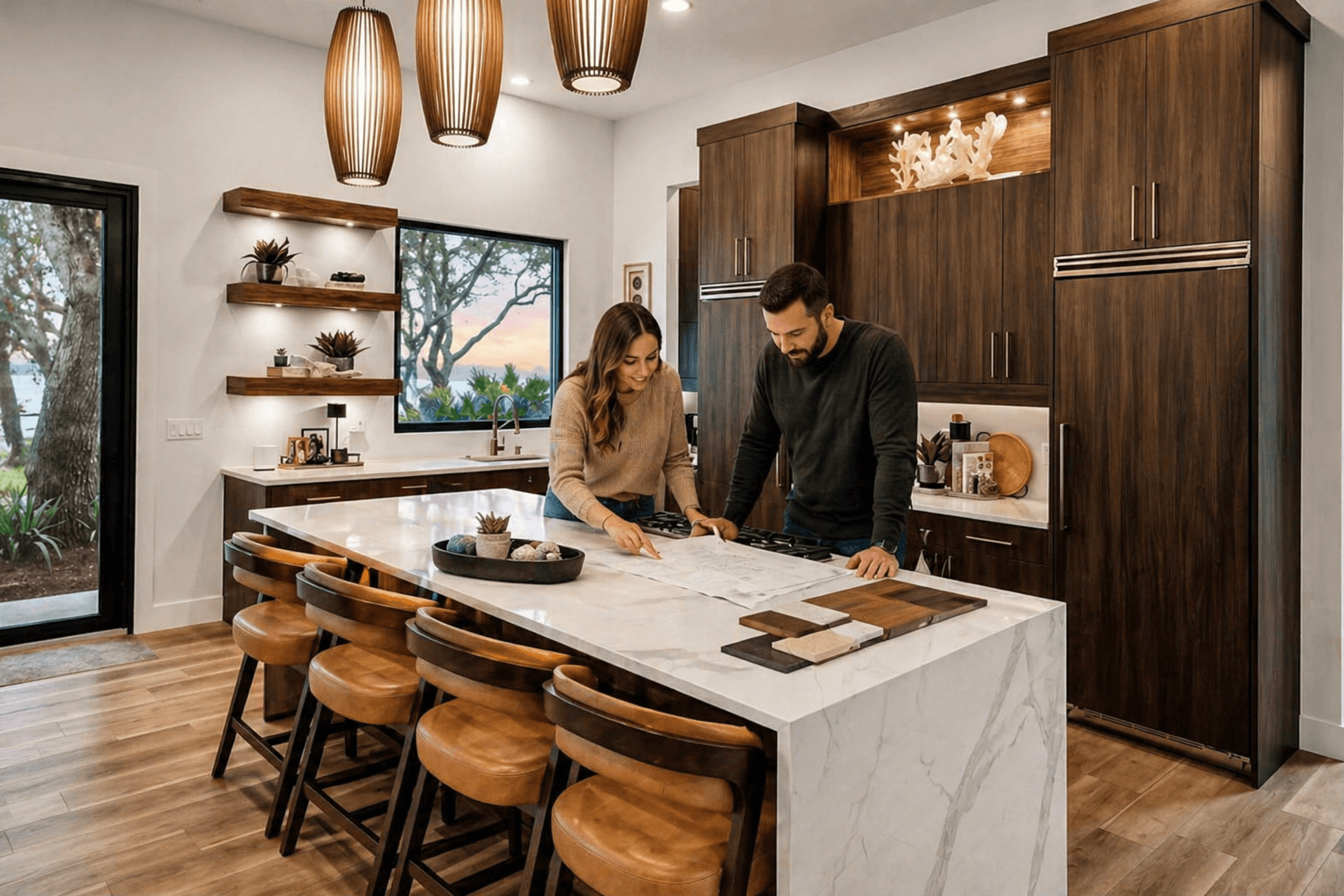
Cabinets dominate visual perception. If the boxes are structurally sound, refacing or painting them delivers transformative impact for 30-50% the cost of replacement. Buyers see “new kitchen.” You see smart spending.
Why it pays off: Visual refresh without the waste or wait of custom builds. Neutral colors (white, off-white, soft gray) appeal to the widest buyer pool.
Updated Hardware and Fixtures
Cabinet pulls, drawer handles, faucet finishes—these tactile details signal care and modernity. Swapping brass for brushed nickel or matte black costs hundreds, not thousands, and eliminates the “hasn’t been touched in 20 years” vibe.
Why it pays off: Low cost, high visual impact. Creates design cohesion without requiring structural changes.
Improved Lighting (Recessed + Task + Pendant)
Buyers remember how a kitchen felt, and lighting controls that feeling more than any other single feature. Adding recessed cans, under-cabinet LED strips, and a statement pendant over the island turns dim into dynamic.
Why it pays off: Makes the space feel larger, cleaner, and more functional. Buyers don’t negotiate down on well-lit kitchens.

Neutral Countertops (Quartz or Granite)
Countertops are a non-negotiable upgrade if the current surface is laminate, tile, or visibly damaged. Quartz and granite in neutral tones (white, gray, beige) check the “modern kitchen” box without polarizing buyers with bold patterns or colors.
Why it pays off: Durability and timeless appeal. Buyers expect stone counters in move-in-ready homes. Exotic slabs don’t add proportional value—stick with classic.
Energy-Efficient Stainless Steel Appliances
Matching stainless steel appliances signal “updated kitchen” to buyers. You don’t need commercial-grade or smart-enabled models. Mid-range, energy-efficient brands (GE, Whirlpool, Samsung) offer the visual cohesion buyers expect without the premium price tags they won’t reward.
Why it pays off: Functional necessity presented attractively. Energy efficiency appeals to cost-conscious buyers without adding complexity.
Tile or Luxury Vinyl Plank Flooring
Flooring sets the foundation—literally. Scratched hardwood, stained linoleum, or cracked tile immediately lower perceived value. Durable, water-resistant flooring like large-format tile or luxury vinyl plank (LVP) offers the look of hardwood with kitchen-appropriate performance.
Why it pays off: Clean, consistent flooring removes a buyer objection and feels finished. LVP especially offers high-end appearance at mid-range cost.
Pro Tip: The highest ROI comes from fixing what’s broken or outdated, not adding what’s luxurious. If your kitchen works but looks tired, cosmetic upgrades outperform gut remodels. If it’s dysfunctional, targeted layout fixes paired with fresh finishes deliver the best balance.
For deeper guidance on planning a remodel that balances personal needs and resale value, explore our complete guide to kitchen remodeling.
Low-Return Kitchen Upgrades to Reconsider
Not all upgrades are created equal. Some feel premium to the homeowner but translate poorly to resale value. These features often reflect personal taste, niche functionality, or brand premiums that buyers either don’t notice or don’t value at the same level.
Commercial-Grade Appliances
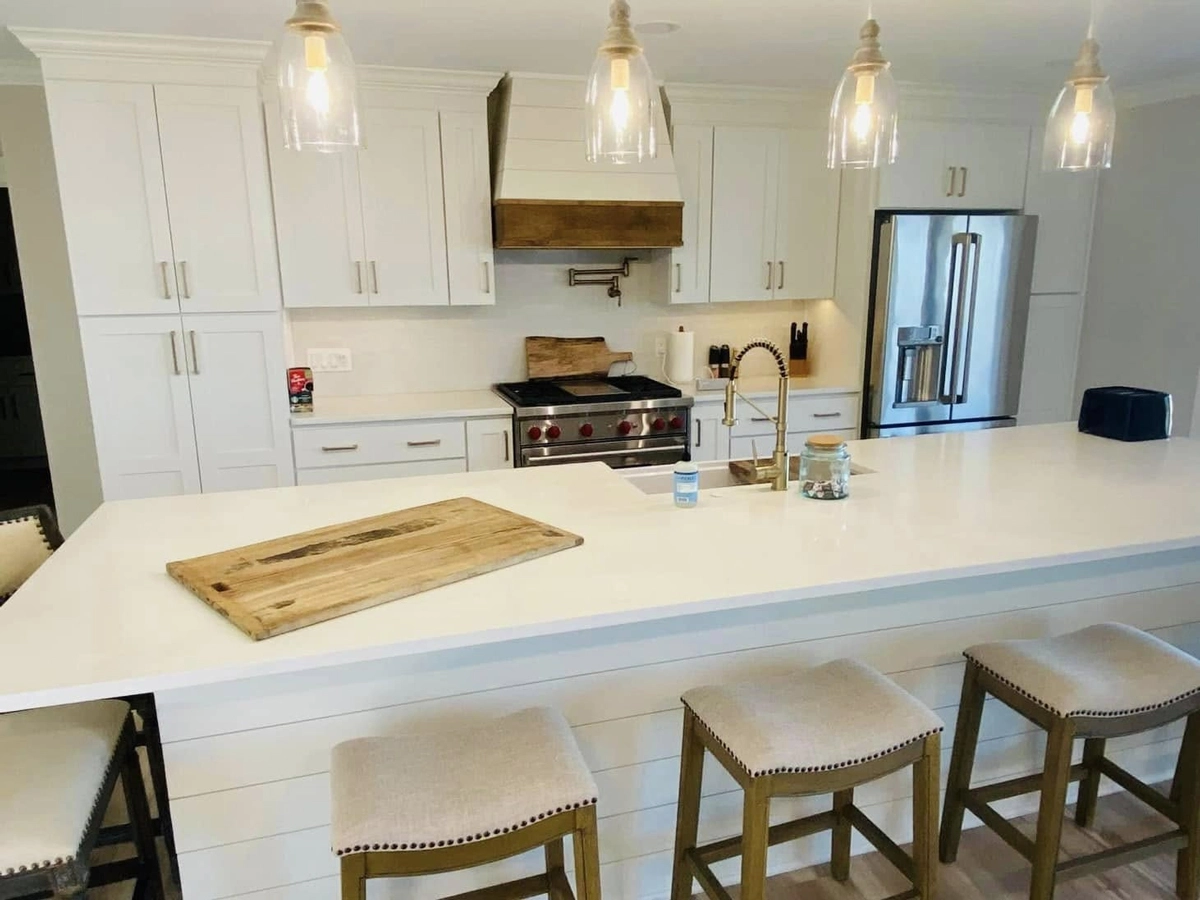
Six-burner ranges, built-in refrigerators, wine fridges—these appeal to serious home cooks but intimidate most buyers. They’re also expensive to maintain and repair. Most buyers won’t pay extra for features they’ll never use.
Exotic or Rare Stone Countertops
Marble, quartzite, and exotic granite slabs are beautiful—and expensive. Buyers appreciate stone, but they don’t distinguish between a $4,000 slab and a $12,000 one. The premium doesn’t translate to higher offers.
Custom Cabinetry with Elaborate Details
Hand-carved moldings, specialty finishes, pull-out spice racks—custom details cost significantly more than stock or semi-custom cabinets. Buyers notice clean lines and good storage. They don’t notice craftsmanship distinctions that add 40% to the bill.
High-End Smart Home Features
App-controlled faucets, smart refrigerators, voice-activated lighting—these feel futuristic but age quickly. Buyers worry about compatibility, software updates, and learning curves. Tech features rarely justify their cost at resale.
Structural Layout Overhauls
Removing walls to create open-concept flow can improve function, but it’s expensive (structural engineering, permits, HVAC rerouting). Unless the current layout is truly dysfunctional, the cost rarely returns proportionally. Buyers value openness, but not at a $30,000 premium.
Over-Personalized Design Choices
Bold backsplash patterns, unusual paint colors, statement tile—these make your kitchen memorable, but not in a way that translates to resale value. Design personality is wonderful if you’re staying. It’s risky if you’re planning to sell soon.
The Neutral Truth: Buyers gravitate toward kitchens that feel clean, modern, and adaptable to their own style. The more specific your design choices, the smaller your buyer pool. If resale is a concern, restraint pays better than boldness.
What Actually Affects Kitchen Resale Value
ROI isn’t determined by the remodel alone. Context matters as much as the upgrades themselves. The same $50,000 kitchen remodel can return 75% in one scenario and 45% in another, depending on factors outside the renovation itself.
Your Home’s Overall Value and Neighborhood Comparables
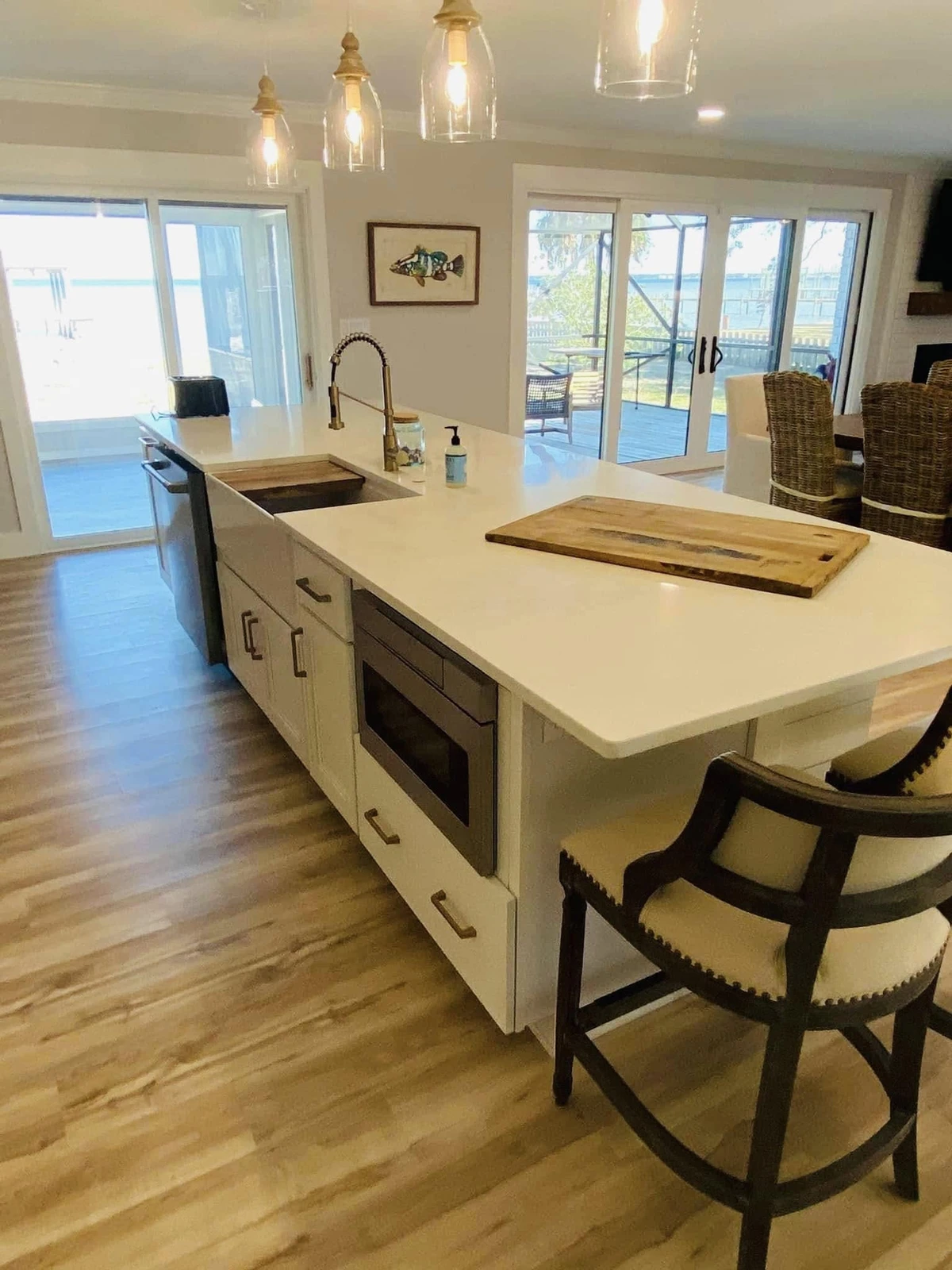
A $75,000 kitchen remodel in a $250,000 home creates an imbalance. Buyers shopping that price range expect updated kitchens, but not luxury finishes that inflate the asking price beyond neighborhood norms. Your home’s value ceiling is set by comparable sales, not by what you spent.
Conversely, in a $600,000 home, a $30,000 kitchen refresh may feel cheap. Buyers at that price point expect cohesion. ROI improves when upgrades align with—not exceed—the home’s market tier.
Condition Before the Remodel
If your kitchen was a deal-breaker—outdated layout, broken appliances, water damage—the remodel removes a barrier. ROI is higher when you’re fixing a problem than when you’re upgrading something that already worked.
A 1980s kitchen with laminate counters and fluorescent lighting? That remodel pays off. A 2010 kitchen with decent finishes? The incremental gain is smaller.
How Long You Stay in the Home After Remodeling
Remodels don’t appreciate like investments. ROI is realized at resale, not over time. If you remodel and sell within 1-2 years, you’ll recoup a higher percentage because the kitchen still feels new. If you wait 10 years, the market has moved on—what felt modern in 2015 looks dated in 2025.
The value of a remodel is partly immediacy. Freshness matters.
Market Conditions and Buyer Expectations
In a seller’s market, updated kitchens command premium offers because inventory is tight and buyers compete. In a buyer’s market, remodels help your home stand out, but they don’t necessarily drive price—they accelerate sale speed and reduce negotiation leverage.
Expectations also shift regionally and demographically. In some markets, granite counters and stainless appliances are baseline. In others, they’re upgrades. Know your market’s expectations before assuming what will pay off.
↑ What Pushes ROI Down
- ↑ Over-improving relative to neighborhood
- ↑ Custom or highly personalized finishes
- ↑ Luxury appliances and exotic materials
- ↑ Structural changes with limited functional gain
- ↑ Selling in a buyer’s market
↓ What Maximizes ROI
- ↓ Matching or slightly exceeding neighborhood standards
- ↓ Neutral, timeless design choices
- ↓ Fixing functional problems (layout, storage, lighting)
- ↓ Cosmetic refreshes over full gut remodels
- ↓ Selling within 1-3 years post-remodel
Should You Remodel Your Kitchen Before Selling?
This is one of the most common questions homeowners face when preparing to list. The answer depends entirely on the kitchen’s current state and your market’s expectations.
When a Pre-Sale Remodel Makes Sense
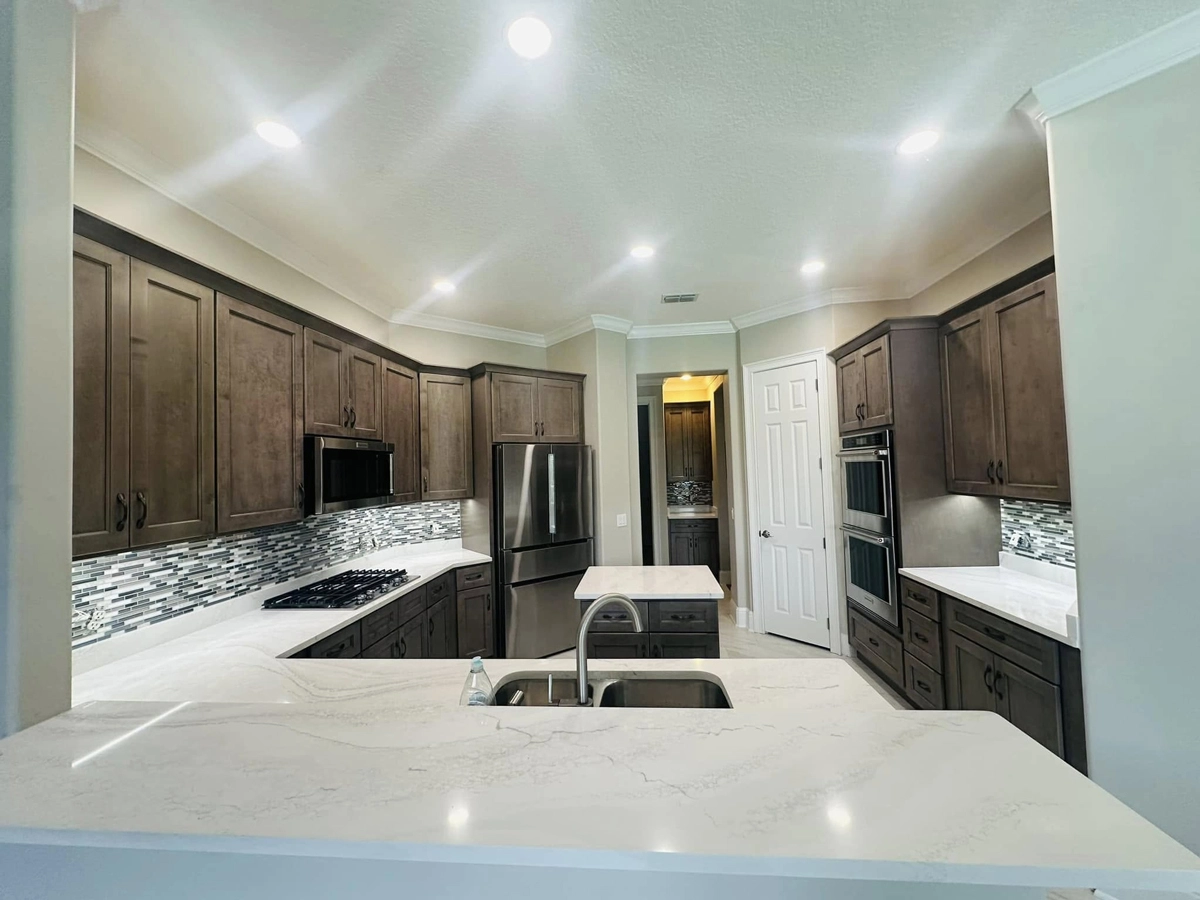
If your kitchen is a liability—visibly outdated, non-functional layout, damaged surfaces, or safety concerns—a targeted refresh removes buyer objections and justifies a higher asking price. In competitive markets, buyers expect move-in-ready homes. A dated kitchen becomes a negotiation tool that costs you more than the remodel would have.
Focus on high-impact, low-cost updates:
- Paint or reface cabinets in neutral tones
- Replace outdated hardware and fixtures
- Upgrade lighting (recessed cans, under-cabinet LEDs)
- Install quartz or granite countertops if current surface is laminate or tile
- Replace appliances if they’re mismatched or visibly worn
These updates typically cost $15,000–$30,000 and return 70-85% at resale while dramatically improving buyer perception.
When to Skip the Remodel and Sell As-Is
If your kitchen is functional but merely dated—think 2000s builder-grade finishes that are clean and operational—a full remodel may not pay off. Some buyers prefer to customize kitchens themselves. You can price accordingly and let the market decide.
Consider selling as-is if:
- The kitchen is functional and clean, just not trendy
- You’re in a hot seller’s market where homes move quickly regardless
- Comparable homes in your neighborhood have similar kitchens
- You don’t have the capital or time to manage a remodel before listing
In these cases, price transparency wins. Acknowledge the kitchen’s condition in listing photos and adjust your asking price to reflect the buyer’s future investment. Many buyers prefer this honesty to a cosmetic flip that hides deeper issues.
Timing Tip: If you’re listing within 6 months, focus on cosmetic updates that can be completed in 2-4 weeks. Avoid major remodels that risk delays, budget overruns, or contractor issues that push your listing timeline. Speed to market often matters more than perfection.
For context on how long different levels of remodel take, see our guide on kitchen remodel timelines.
How to Maximize Kitchen Remodel ROI Without Sacrificing Your Vision
You don’t have to choose between a kitchen you love and one that protects your equity. The best remodels serve both goals. The key is strategic allocation: invest in the features that matter universally, personalize in ways that don’t reduce resale appeal.
Planning Phase
- ☑ Research comparable home sales in your neighborhood
- ☑ Identify your home’s realistic value ceiling
- ☑ Set a remodel budget at 5-15% of home value
- ☑ Decide on your timeline: selling soon or staying long-term?
Execution Phase
- ☑ Prioritize function and layout fixes first
- ☑ Choose neutral finishes for fixed elements (cabinets, counters, floors)
- ☑ Personalize through changeable details (hardware, lighting, decor)
- ☑ Avoid brand-name premiums on appliances and fixtures
Resale Phase
- ☑ Highlight functional improvements in listing copy
- ☑ Professional photos that emphasize light and space
- ☑ Stage neutrally to let buyers envision their own style
- ☑ Price competitively based on comps, not remodel cost
The 70/30 Rule for ROI-Conscious Remodels
Spend 70% of your budget on universal, high-ROI features that every buyer values: functional layout, quality cabinets, durable countertops, good lighting, neutral finishes. These are non-negotiables that justify your asking price.
Use the remaining 30% for personal touches that make the kitchen yours: a unique backsplash, statement lighting, open shelving, a bold island color. These elements won’t necessarily return their cost, but they make the space livable and enjoyable for you. Just keep them changeable or visually contained so they don’t alienate future buyers.
Strategic Personalization: Want a bold backsplash? Go for it—but keep cabinets and counters neutral so buyers can easily envision swapping the tile. Want smart appliances? Choose models with manual overrides so tech-averse buyers aren’t intimidated. Personalize in layers that can be peeled back without gutting the whole design.
For more ideas on balancing style and budget, explore our collection of small kitchen remodel ideas that maximize visual impact without overspending.
Frequently Asked Questions About Kitchen Remodel ROI
What kitchen remodel features have the highest ROI? +
Minor kitchen updates typically return 80-85% of investment, with cabinet refacing, hardware upgrades, and lighting improvements offering the strongest returns. Mid-range remodels focusing on functionality over luxury tend to recoup 60-70% at resale, while high-end remodels often return only 50-55% due to over-personalization and market ceiling effects.
Does a kitchen remodel increase home value? +
Yes, but the increase depends on scope and market alignment. A well-executed kitchen remodel can add 5-15% to your home’s value, with the highest returns coming from updates that match neighborhood expectations rather than exceed them. Over-improved kitchens in moderate markets often see diminishing returns.
How much value does a new kitchen add to your home? +
A minor kitchen remodel averaging $25,000 typically adds $20,000-$21,000 in home value. A mid-range major remodel at $75,000 adds approximately $45,000-$52,500. The dollar amount added depends heavily on your home’s current value, neighborhood comparables, and whether the kitchen was a liability before renovation.
What kitchen upgrades are not worth the cost at resale? +
Commercial-grade appliances, ultra-luxury countertops like exotic stone, custom cabinetry with elaborate details, and high-end smart home integrations typically don’t return their investment. Buyers value function and aesthetics over brand names and tech features that may feel intimidating or quickly outdated.
Should I remodel my kitchen before selling my house? +
It depends on the kitchen’s current condition and your market. If the kitchen is a deal-breaker (outdated layout, broken appliances, safety issues), a targeted refresh pays off. If it’s merely dated but functional, cosmetic updates like paint, hardware, and lighting often deliver better ROI than a full remodel when selling soon.
How long does it take to recoup kitchen remodel costs? +
Most homeowners recoup kitchen remodel costs at the point of sale, not through monthly appreciation. Minor remodels recoup 80-85% immediately upon resale. If you’re staying in the home, the ‘return’ comes through improved quality of life, functionality, and energy savings rather than direct financial gain.
Ready to Build a Kitchen That Pays You Back?
Understanding ROI is one thing. Executing a remodel that balances your vision with smart resale strategy is another. Whether you’re planning to stay for decades or list in a few years, we help you make choices that serve both goals.
No pressure. No pitch. Just honest guidance on what works, what doesn’t, and how to get the kitchen you want without leaving money on the table.
Book Your Free ConsultationOr call 352-431-0399 to talk through your project