
You’ve decided to remodel your bathroom. You have design ideas, material samples, and maybe even a contractor lined up. Then someone mentions permits, and suddenly you’re wondering if your project just got a lot more complicated.
The short answer: most bathroom remodels in Lake County require permits, especially if you’re changing plumbing, electrical, or structural elements. But understanding exactly what requires a permit, what the process looks like, and why it matters will help you plan your project with confidence.
This guide walks through Lake County’s bathroom remodel permitting requirements, the actual process, costs, timelines, and what happens if you skip this step.
Table of Contents
- What Type of Bathroom Work Requires a Permit in Lake County?
- Which Type of Bathroom Remodeler Are You?
- How Much Does a Bathroom Remodel Permit Cost in Lake County?
- The Lake County Bathroom Remodel Permit Process Step-by-Step
- Can I Pull My Own Permit as a Homeowner?
- What Inspections Are Required for a Bathroom Remodel?
- What Happens If You Remodel Without a Permit?
- How Long Does It Take to Get a Permit Approved?
- Frequently Asked Questions
Which Type of Bathroom Remodeler Are You?
The Cosmetic Updater
You’re refreshing finishes—new paint, vanity, mirror, fixtures in the same locations. You likely don’t need a permit as long as no plumbing or electrical changes are involved.
The Layout Changer
You’re moving the toilet, relocating the shower, or adding a second sink. You definitely need a permit—this involves plumbing relocation and likely electrical work.
The Full Renovator
You’re gutting everything—walls, plumbing, electrical, maybe even expanding the footprint. You need permits for all trades, and your contractor will handle the permitting process as part of the project.
What Type of Bathroom Work Requires a Permit in Lake County?
Lake County building codes are clear: any work involving plumbing, electrical, or structural changes requires a permit. The confusion usually comes from not understanding what counts as a “change.”
Work That Requires a Permit
- Moving any plumbing fixture (toilet, sink, shower, tub)
- Changing drain or supply line locations
- Adding or relocating electrical outlets, switches, or lighting
- Installing new circuits or upgrading electrical panels
- Removing or adding walls (structural or non-structural)
- Installing new shower pans or tub surrounds with plumbing changes
- Replacing water heaters
- Adding ventilation fans with new electrical or ductwork
Work That Typically Does Not Require a Permit
- Painting walls and ceilings
- Replacing vanity or cabinet without plumbing changes
- Installing new flooring (tile, vinyl, etc.)
- Replacing fixtures in the same location (faucet, showerhead, toilet)
- Installing mirrors, towel bars, shelving
- Replacing light fixtures in existing boxes without circuit changes
Pro Tip: If you’re uncertain whether your specific project requires a permit, contact the Lake County Building Department directly before starting work. A quick call can save you from costly mistakes later.

How Much Does a Bathroom Remodel Permit Cost in Lake County?
Permit costs in Lake County vary based on the scope and valuation of your project. The building department calculates fees using a combination of project value, square footage, and trade-specific fees (plumbing, electrical, structural).
Here’s what most bathroom remodels cost in permit fees:
These fees cover plan review, inspections, and administrative processing. They do not include the cost of the actual work—they’re strictly for the permitting process itself.
Important: Permit fees are based on the declared project value. Underestimating project value to reduce fees can result in fines and complications during final inspection.
The Lake County Bathroom Remodel Permit Process Step-by-Step
Understanding the permit process helps you plan your project timeline and avoid surprises. Here’s how it works when you work with a licensed contractor in Lake County:
Plan Preparation
Your contractor prepares detailed drawings showing plumbing, electrical, and structural changes.
Application Submission
The contractor submits the permit application with plans, project value, and contractor license info.
Plan Review
Lake County reviews plans for code compliance. They may request revisions or clarifications.
Permit Approval
Once approved, your contractor pays the permit fees and receives the official permit to start work.
Inspections & Work
Work proceeds with scheduled inspections at key milestones (rough plumbing, rough electrical, final).
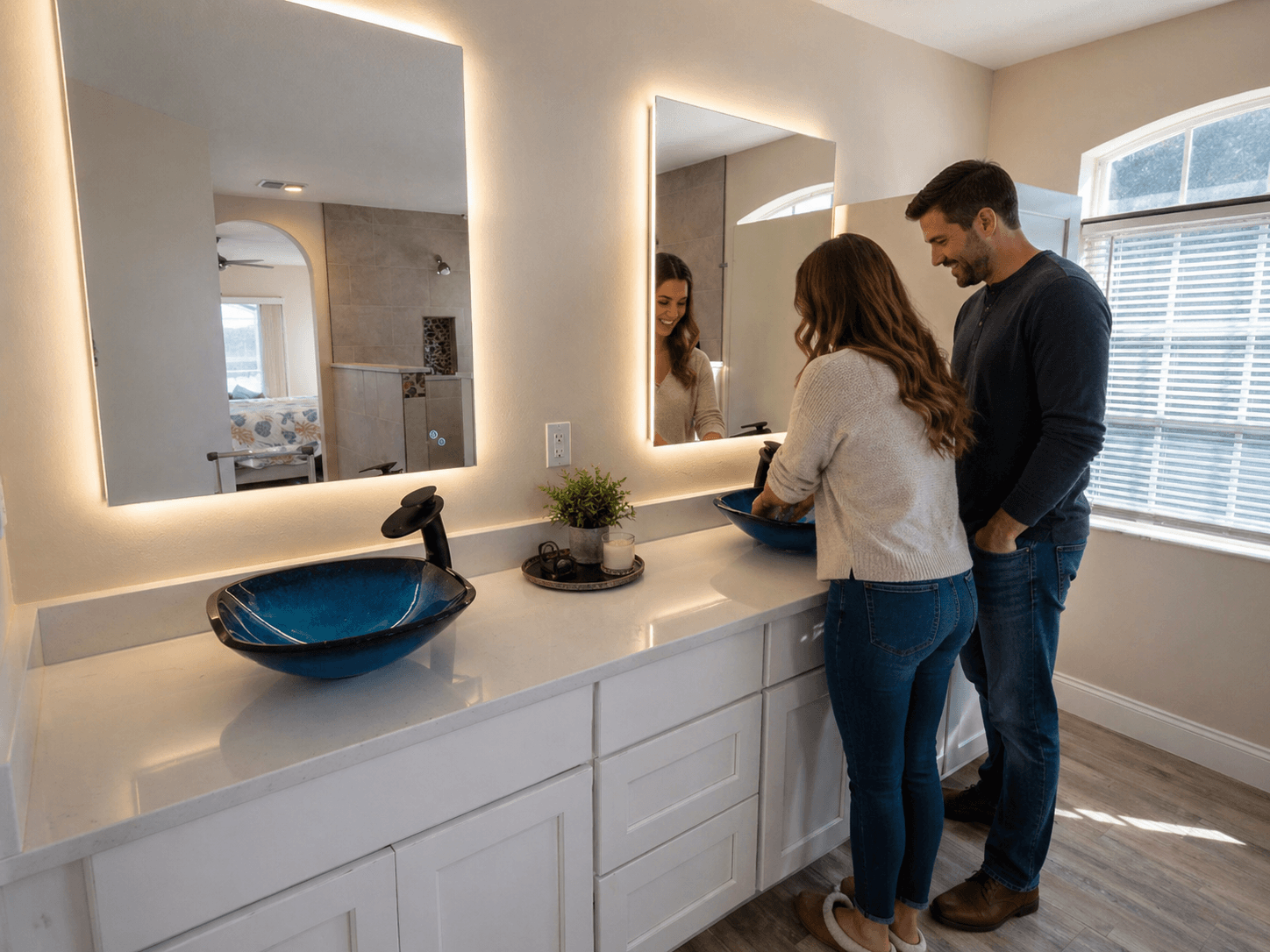
Most experienced contractors handle the entire permit process for you. It’s built into their service, and they know exactly what Lake County requires. This is one reason why working with a licensed, insured contractor simplifies your remodel significantly.
For more detail on how the full bathroom remodeling process works from start to finish, see our guide on the bathroom remodeling process.
Can I Pull My Own Permit as a Homeowner in Lake County?
Yes. Lake County allows homeowners to pull their own permits for work on their primary residence. This is sometimes called a “homeowner permit” or “owner-builder permit.”
However, pulling your own permit comes with significant responsibilities:
What You Can Do
- Pull permits for your primary residence
- Perform work yourself if you’re capable
- Hire unlicensed labor to assist you
- Save on contractor markup
What You’re Responsible For
- Understanding and meeting all code requirements
- Scheduling and passing all inspections
- Correcting any failed inspections yourself
- Legal liability for code violations or defects
Important Limitation: If you hire a licensed contractor, plumber, or electrician to perform any part of the work, they must pull the permit under their license. You cannot pull a homeowner permit and then hire licensed trades.
Most homeowners choose to work with a licensed contractor for bathroom remodels because plumbing and electrical work require specialized knowledge, and mistakes can be expensive—or dangerous—to fix.

What Inspections Are Required for a Bathroom Remodel in Lake County?
Lake County requires multiple inspections throughout your bathroom remodel to verify code compliance. The number and type of inspections depend on your project scope.
Here are the most common inspections for bathroom remodels:
Rough Plumbing Inspection
When: After all drain and supply lines are installed but before walls are closed up
Checks: Proper pipe sizing, slope, venting, connections, and leak testing
Rough Electrical Inspection
When: After wiring, outlets, and junction boxes are installed but before walls are closed
Checks: Proper wiring, GFCI protection, circuit sizing, box installation
Insulation Inspection
When: After insulation is installed but before drywall goes up
Checks: Proper R-value, coverage, vapor barriers (if applicable)
Final Inspection
When: After all work is complete and fixtures are installed
Checks: Everything functions properly, code compliance, safety, quality of finish work
Pro Tip: Your contractor schedules inspections and must be present when the inspector arrives. Inspections typically happen within 24–48 hours of requesting them, but timelines can vary during busy construction seasons.
Each inspection must pass before moving to the next phase. If an inspection fails, the contractor corrects the issues and schedules a re-inspection. Experienced contractors rarely fail inspections because they know exactly what Lake County inspectors look for.
What Happens If You Remodel Your Bathroom Without a Permit in Lake County?
Some homeowners consider skipping the permit process to save time or money. This is a mistake. The consequences of unpermitted work can be severe and expensive.
🚩 Red Flags: Consequences of Unpermitted Bathroom Remodels
🚩 Code Violations & Fines
Lake County can issue fines for unpermitted work, and you may be required to obtain permits retroactively—which costs more than permitting upfront.
🚩 Required Tear-Out
Inspectors may require you to expose finished work so they can verify code compliance. This means tearing out drywall, tile, or other finishes you already paid for.
🚩 Home Sale Complications
Title companies and buyers often require proof of permits for major remodels. Unpermitted work can delay or kill a home sale.
🚩 Insurance Claim Denials
If unpermitted electrical or plumbing work causes damage (fire, water leak), your homeowner’s insurance may deny the claim.
🚩 Safety & Liability Issues
Unpermitted work may not meet code. If faulty plumbing or electrical work causes injury or property damage, you bear full legal liability.
🚩 Stop-Work Orders
If Lake County discovers unpermitted work in progress, they can issue a stop-work order, halting your project until permits are obtained.
The cost and time savings of skipping permits are almost always wiped out by the consequences when unpermitted work is discovered. Professional contractors always pull permits—it’s a standard part of doing the job right.

How Long Does It Take to Get a Bathroom Remodel Permit Approved in Lake County?
Permit approval timelines in Lake County depend on the complexity of your project and how busy the building department is at the time of submission.
Here’s what to expect:
Simple Projects
5–10 Business Days
Straightforward bathroom remodels with no structural changes or complex systems typically get approved within a week to ten days.
Complex Projects
2–3 Weeks
Projects requiring structural engineering review, significant plumbing rerouting, or electrical panel upgrades may take longer for plan review.
Incomplete Applications
Delays of 1–2+ Weeks
Missing documentation, unclear plans, or code compliance questions will delay approval until the contractor provides additional information.
Pro Tip: Experienced contractors build permit approval time into their project timelines. If your contractor says they’ll start work in three weeks, they’re likely accounting for the permit process.
For a complete breakdown of the entire bathroom remodel timeline—from planning through completion—see our guide on how to plan, budget, and build your bathroom remodel with confidence.
Understanding Lake County Building Codes for Bathroom Remodels
Lake County follows the Florida Building Code, which is based on the International Residential Code (IRC) with Florida-specific amendments. Understanding a few key code requirements helps you plan your remodel realistically.
Common Code Requirements for Bathroom Remodels
- GFCI Protection: All bathroom outlets and circuits must have ground-fault circuit interrupter (GFCI) protection to prevent electrical shock near water sources.
- Ventilation: Bathrooms must have either a window or mechanical ventilation (exhaust fan) that vents to the exterior—not into the attic.
- Plumbing Venting: All drains require proper venting to prevent sewer gas buildup and ensure proper drainage.
- Water Heater Standards: If you’re replacing or relocating a water heater, it must meet current energy efficiency and safety standards, including proper venting and drain pan installation.
- Structural Support: Any walls removed or openings created must maintain proper structural support, often requiring headers or beams designed by an engineer.
- Accessibility: While full ADA compliance isn’t required in residential remodels, many homeowners choose to incorporate aging-in-place features for future accessibility.
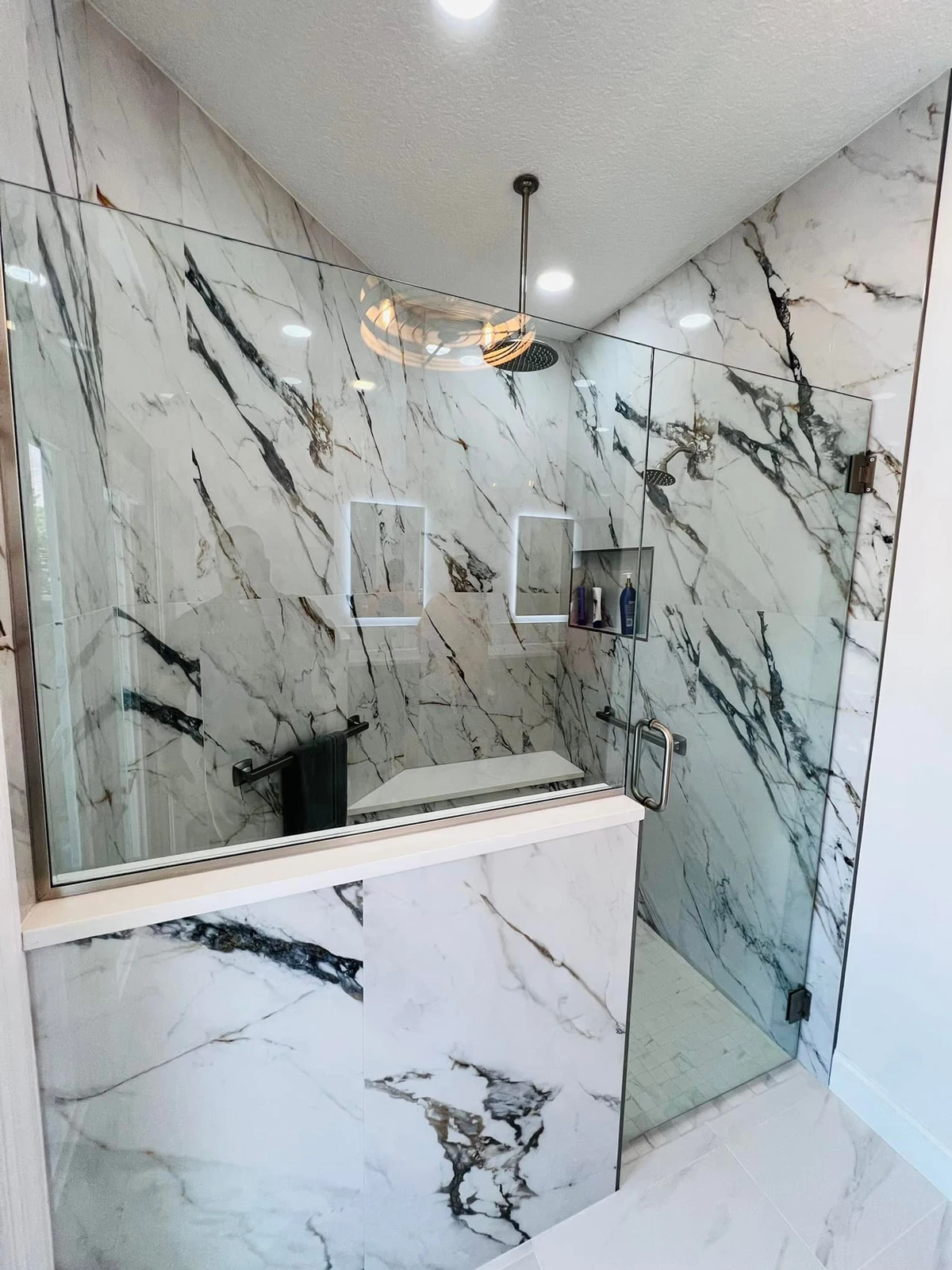
Your contractor handles all code compliance, but understanding these basics helps you have informed conversations during the planning process.
How to Find a Contractor Who Handles Permits Properly
The simplest way to ensure your bathroom remodel is properly permitted is to hire a licensed, insured contractor who handles permitting as part of their service.
Here’s what to look for:
✓ Licensed & Insured
Verify the contractor holds a valid Florida contractor license and carries liability insurance. You can check license status on the Florida Department of Business and Professional Regulation website.
✓ Handles Permitting
Ask directly: “Do you pull permits for your projects?” A professional contractor will say yes and explain the process. If they suggest skipping permits, walk away.
✓ Local Experience
Contractors familiar with Lake County’s building department know what inspectors expect and how to submit complete, approvable plans the first time.
✓ Written Contract
The contract should clearly state that permits will be pulled and specify who is responsible for permit costs (usually included in the project price).
For more guidance on choosing the right professional for your project, explore our resources on bathroom remodeling and what to expect throughout the process.
Frequently Asked Questions About Bathroom Remodel Permits in Lake County
What type of bathroom work requires a permit in Lake County, FL?
In Lake County, any bathroom work involving plumbing, electrical, or structural changes requires a permit. This includes moving fixtures, adding outlets or lighting, changing drain locations, replacing water heaters, or removing walls. Simple cosmetic updates like painting, installing new vanities without plumbing changes, or replacing flooring typically do not require permits.
How much does a bathroom remodel permit cost in Lake County?
Bathroom remodel permit costs in Lake County typically range from $150 to $800 depending on scope. Small remodels with minimal plumbing and electrical work may cost $150–$300 in permit fees. Mid-level remodels involving fixture relocation and new electrical circuits typically run $300–$500. Full gut remodels with structural changes and significant system work can reach $500–$800 or more. The exact cost is calculated based on project valuation and scope.
Can a homeowner pull their own bathroom remodel permit in Lake County?
Yes, homeowners in Lake County can pull their own permits for work on their primary residence. However, you assume full responsibility for code compliance, inspection scheduling, and correcting any failed inspections. You must also live in the home as your primary residence. If you hire any licensed contractors, they must pull permits under their license. Most homeowners working with professional remodelers allow the contractor to handle all permitting.
How long does it take to get a bathroom remodel permit approved in Lake County?
Lake County building department typically processes bathroom remodel permits within 5–10 business days for straightforward projects. More complex remodels requiring plan review or structural engineering may take 2–3 weeks. Incomplete applications or missing documentation will delay approval. Working with an experienced contractor who submits complete, code-compliant plans significantly speeds up the process.
What happens if I remodel my bathroom without a permit in Lake County?
Remodeling without required permits in Lake County can result in fines, required tear-out of completed work, difficulty selling your home, insurance claim denials, and liability if unpermitted work causes injury or damage. The county can issue stop-work orders and require you to obtain permits retroactively, which often costs more and involves exposing finished work for inspection. Most title companies and buyers require permit verification during home sales.
What inspections are required for a bathroom remodel in Lake County?
Lake County bathroom remodels typically require three to five inspections depending on scope: rough plumbing inspection after drain and supply lines are installed but before walls close; rough electrical inspection after wiring and boxes are installed; insulation inspection if applicable; and final inspection after all finish work is complete. Each inspection must pass before proceeding to the next phase. Your contractor schedules these inspections at appropriate project milestones.
Ready to Start Your Bathroom Remodel the Right Way?
Understanding permits is just one part of planning a successful bathroom remodel. When you work with a licensed contractor who handles permitting properly, you get peace of mind knowing your project is built to code, insurable, and won’t cause complications down the road.
If you’re planning a bathroom remodel in Central Florida and want to work with a team that takes care of every detail—including permits, inspections, and code compliance—we’re here to help.
Book Your Free ConsultationNo pressure, no pitch—just honest answers and a clear plan for your project.